In the 1850s it was illegal in Georgia to teach an enslaved person to read or write. Dolly Reed knew that. And she sent her granddaughter to school anyway.
Dolly Reed was a laundress in Savannah. She washed other people's clothes for wages. She could not read or write herself. But she understood that her granddaughter Susie would need to read to survive. Half a mile from her house on Bay Lane lived a free woman of color named Mrs. Mary Woodhouse. Mrs. Woodhouse ran a school inside her home. Twenty-five to thirty children. Taught every day. Hidden in plain sight.
Every morning Susie and her brother left with their books wrapped in paper so no one could see what they were carrying. They entered one at a time through the gate and down to the kitchen where the schoolroom was.
The Estill's Savannah Directory confirms Mary H.E. Woodhouse at Bay Lane at the lane three west of Price Street — the exact location described in Susie King Taylor's own memoir. Susie escaped slavery in 1862, became the first Black Army nurse in American history, and wrote the first memoir published by a Black woman about the Civil War. It started in a kitchen on Bay Lane. No markers anywhere in Savannah for either woman.
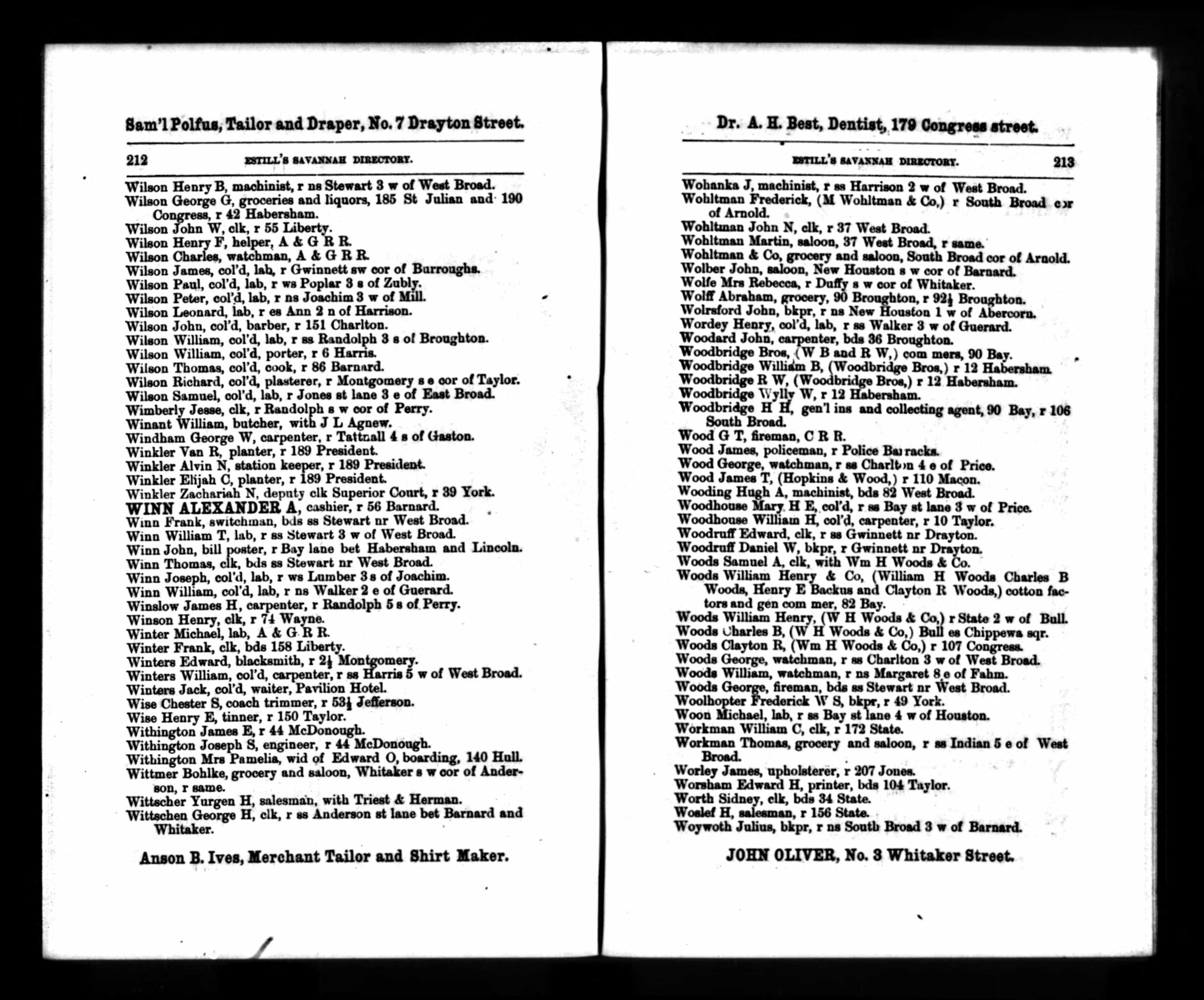
| Name | Woodhouse Mary H E |
| Race | col'd |
| Address | r as Bay at lane 3 w of Price |
| Cross-reference | Susie King Taylor memoir 1902 |
| Note | Exact location described in memoir confirmed |